THE WEBSITE
Welcome to this website
If you are visiting this site because you have just finished reading “The Bubble” please click here to enter the main site. If not, I really
think you would have much more fun if you read “The Bubble” first. Click here to purchase a copy.
START PAGE
Welcome again.
I hope you enjoyed reading “The Bubble” and found it fun. Why have a website? Well, before he died, Jack asked me to put together this
website to explain what we have done, to explain the finer points of the technology and some deeper background to the whole story.
Also Jack was extremely clever – some might call him a genius – but considering that, he wasn’t computer-literate. However, since one of
his key principles was never to claim any successes and, if asked, to deny everything as long as possible, I feel I must start off by saying
“WE NEVER VISITED MARS!” How could we anyhow?
Here’s how.
As Jack explained when I first met him, most if the Universe is believed to be made up of Dark Energy – about 68.3% in fact. If that
energy could be tapped into, it would have limitless possibilities of which powering a spacecraft is only one. If that energy could be used
to drive a Gravity Field Generator, then spacecraft would be able to accelerate to near light speed in a fraction of a second without
harming any living things on board. However since Dark Energy is believed to be responsible for the accelerating expansion of the
Universe, then perhaps Dark Energy could somehow be used to accelerate other objects directly. This is what Jack managed to do and he
called the device he built to do this his “Kinetiser”.
Here’s why.
Why did Jack go to all this bother? It wasn’t because he was a great adventurer although he was an adventurer: just not a great one. It’s
because he was convinced that there had to be a better way of getting into space and, by better, we mean easier, cheaper and safer. All
other space systems of which he was aware were over-complex and had to be stretched to the limit to do the job that people wanted
them to. Fuels were dangerous and mission plans lacked significant flexibility. Low levels of flexibility meant that there was very little
margin to cope with malfunctions and so exacerbated the safety issues.
Just consider an passenger ordinary plane taking off from an airport: is there’s somehting they don’t like as they are rolling down the
runway, the pilots can abort the takeover, go back to the terminal and try again soon afterwards. You can’t do thsi in a rocket blasting iff
from its launch pad. Once it hasw left the pad, there are no second chances. The same with landing.
He was content to fly all the test flights solo. This was risky because if he had been taken ill or had an accident, he might be unable to
return to Earth, and the work done would be lost for ever.
Safety
Categorise by phase of flight ?
Space Travel is a very dangerous activity for humans to undertake. The spacecraft (“The Spaceraft”) that Jack built is absolutely no
exception to this, but in many ways it is very much safer than any other manned space flight systems currently invented.
A key point is that the Spaceraft’s propulsion system – the “Kinetiser” does not use hundreds of tonnes of highly dangerous fuels such
kerosene, or liquid hydrogen. Nor does it use liquid oxygen which is also very dangerous or other toxic chemicals. Also avoided are
hypergolic fuel systems - eg those using hydrazine/dinitrogen tetroxide combinations. The mechanisms in the Kinetiser are very simple
and therefore inherently reliable.
In conventional spacecraft, there is also vastly more scope for error in most aspects of navigation. As the Kinetiser uses Dark Energy as a
propellant and supplies of this are unlimited, there is plenty of scope for changes of route. In fact, once you have built a Kinetiser you
can go any where in the universe in it. Contrast this with a conventional space rockets where the amount of fuel is always limited,
severely restricting where it can go and how fast.
Nowhere is this more obvious than when conventional spacecraft return to Earth. In the case of a manned space probe in orbit around
the Earth, a small amount of fuel will be burned to alter the craft’s trajectory so that it intercepts the Earth’s atmosphere. Thereafter,
friction with the atmosphere provides most of the braking effort required, with parachutes or other braking devices only being deployed
after the velocity has dropped to a tiny percentage (eg one per cent) of the previous orbital speed (typically 18,000 miles per hour.) This
approach uses a minimum of fuel but considerable heat is generated so that such spacecraft have to be fitted with a heatshield to
preserve valuable payloads such as human beings. Errors in the trajectory can easily be fatal.
With Jack’s Spacecraft in orbit around the Earth however , the return process is much simpler. The Kinetiser will be set to reduce the
speed almost instantly from 18,000 mph to say 100 mph. The Spacecraft will then begin to fall almost vertically downwards. During the
descent, the Kinetiser will be fired a few times to keep the speed low so that atmospheric heating and buffeting do not become a
problem. Landing is then as simple as taking off.
The net result of this is that the whole landing process is much safer and simpler and, if anything does start to go wrong, it is a simple
matter to reverse out of the situation and try again. This is most definitely not the case with conventional space vehicles. Once you have
begun your descent to earth, there is absolutely no way to reverse the process.
For similar reasons, take-off is also very much safer. At anytime, the spaceraft can be flown harmlessly back to base and another
attempt made when conditions are better. See also the “autopilot” section.
An air leak in a manned space vehicle is always a serious matter, and Jack’s Spaccraft is no exception. Jack made the SpaceRaft out of an
old aircraft cockpit that was never designed to operate in the vacuum of space. When the SpaceRaft is in space, the pressure difference
between the inside of the cockpit and the outside is much more than the cockpit was designed to cope with. Jack therefore went to great
lengths to strengthen the spaceraft to cope with this differential and also to reduce leakage to a minimum. He arranged the door and
window seals so that the air pressure inside the craft would press the seals tightly together – rather than to tend to burst them oout.
During the early test flights, he monitored the rate at which air leaked out and satisfied himself that he could cope with the amount of
leakage he had found. One key point here is that Jack knew that most of the flights he was interested in could be accomplished within an
hour, including the time needed to return to base and open the cockpit doors.
Radiation is a hazard in space, but Jack realised that with the short duration flights he envisaged, the total exposure to radiation would
be minimal.
Likewise, collision with space objects, micrometeoroids etc is something Jack was prepared to risk. He realised of course than any such
collision would be fatal, but he knew that it was unlikely to happen.
Collision with aircraft was considered very seriously by Jack, particularly as his home was located so close to both Gatwick and Redhill
airports. This is why he monitored air traffic so closely to ensure that collisions would not happen. After the first few test flights he
realised that the Kinetiser effectively generates a protective bubble around the Spaceraft and so protects it from bird strikes. Jack
believed that a collision with a conventional aircraft would have devastating results, particularly for the other aircraft. He imagined that
the strong gravitational forces just outside the Spaceraft would be sufficient to rip any conventional aircraft apart, as different parts of
the aircraft would be subject to massively varying g-forces causing it to be torn apart without any of the hardware actually touching. Jack
felt that the Spaceraft itself might escape with minimal or even zero damage, but for him the safety of the conventional air traffic was
paramount and he did everything he could to stay well out of harm’s way.
In conventional spaceflight, when things go wrong they can quickly deteriorate into catastrophe. Astronaut training is therefore
focussed on developing a thorough understanding of all the spacecraft systems and their failure modes so that they can prevent minor
problems developing into major ones.
Most other issues are only significant in long duration flights. Issues such as becoming ill, running out of food, water or oxygen,
radiation, toilets and bathrooms, don’t matter much when all the flights that you want to make can be accomplished in an hour or so
with a little forward planning - even a trip to Mars and back.
Spacewalks are also hazardous and Jack dealt with this by simply deciding that there wouldn’t be any. He didn’t have the R&D capability
in his farm to make space suits and wanting to keep the whole project as simple as possible, it was easiest to abandon any desire to
leave the cockpit until he was safely back on Earth again.
Autopilot
The idea of an autopilot was anathema to Jack, and he did not have one. However, certain parts of the flight were automated as speeds
were very high and he had to maintain very high speeds to be sure of getting back to the farm before his air supply ran out. For
example, a typical flight to Mars (which Jack would deny having ever done) involves an outbound distance of 100 to 200 million
kimometres, depending on the relative positions of Earth and Mars at the time of flight.
Steady acceleration for 100 million kilometres for 100 seconds requires an acceleration of
100,000,000,000 = 0.5 x accn x 100 x 100
Accn = 20,000,000 metre per sec per sec ( 2 million g)
Peak speed = 200,000,000 metres per second
= 200,000 kilometres per second ( or two thirds of the speed of light)
So if you delay your slowing down profile by 1 second, you would overshoot the target by 200,000 kilometres – this would be serious or
crash into it at 20 km per second.
Autopilot: sequence, rewind button, enables you to go much quicker once you have the settings right.
Navigation
The first aspect that Jack had to consider was avoiding collisions with other aircraft. Fortunately systems such as the AirNav RadarBox
Pro are available in the UK for as little as £300. They are easy to use and provide a good display on a map of all the aircraft within at
least 100 kilometer range in all directions. Jack used a similar box to monitor all relevant air traffic and make certain his flightpath was
well clear of all civil aircraft. He also used airband radio to monitor voice transmissions directly.
http://www.hamradio.co.uk/avionics-avionic-aircraft-radar-airnav-systems/airnav/airnav-radarbox-pro-pd-2990.php
Using this system, Jack was readily able to avoid flying too near to other air traffic. But there was another issue that bothered him at first
and that was the near-inevitability of his spacecraft being detected by air traffic and military radar systems. His original idea was to
attempt only very low altitudes for the first flights. This would allow him to gain confidence in the equipment he had built and in his own
ability to fly it, free from any worry that his enterprise would be closed down by the authorities before it had barely even started. He
would then to go for one serious test flight in the lower Earth’s atmosphere where he would definitely be detected but before he and his
spaceport, could be tracked down he would go for the biggie – a flight to the moon. After that he would resign himself to the inevitable.
However, it was during his first proper test flight – planned for a height of about 3000 metres – that another idea came to him. For this
flight he had installed a video camera on the roof of the green barn pointing upwards to record his flight from below. As Jack explained
to me later, “My plan was to view the video after the flight so that I could know just how much rubbish – leaves and stuff - would be
dragged along with us in the gravitational bubble. I expected it to be a very strange sight indeed, but during that first proper flight
something else happened. I was both relieved and delighted that the kinetiser was working so well but what I could see through the
cockpit was something total unexpected. A sight that increased in intensity as I applied more power to the kinetiser and which I knew I
had to compare with what the green barn video camera had recorded as soon as possible after landing. On one hand, the kinetiser was
functioning perfectly and tempting me to extend the flight further; it was easy, it was fun and it was something that no-one on Earth had
ever done before. Yet what I saw outside the cockpit window was almost miraculous and totally unexpected.”
Jack had seen a distortion in his view of the world beyond the cockpit windows. He imagined that it probably caused by some kind of
interaction between the kinetiser’s gravitational field and the light waves in and around the spacecraft. Sure enough, Jack explained, the
video of the spacecraft as seen from the green barn’s roof was very strange indeed. In fact it was hard to see that there was actually a
spaceship there at all – just a very large, shiny and distorted blur. Sadly I never saw the actual video that Jack’s camera had taken, but he
described it to me as looking rather like a photograph taken through a fish-eye lens, only a lot fuzzier, with the fuzziness so much bigger
than the spacecraft itself that even the green barn looked blurry until the spaceraft had climbed well away.
Although that was the visual effect he experienced in the early days, when the Kinetiser had been operating at a relatively low power
level, the effect of running high power was much more dramatic. In essence, the force of gravity can deflect a beam of light and in the
case of the Kinetiser, it pulls the beam of light in the direction of the artificial gravitational field. So when the spacecraft is accelerating
forwards at full power, the gravity vector is pointing forward all the light also gets focussed forwards in the same direction as the
spacecraft is accelerating. The net effect of this is that the view ahead (in the direction of travel) goes dark, but if you look behind you,
you see a small circular of light, which is a distorted image of everything around the spacecraft, but distorted into a view like that
provided by a fisheye lens. So when accelerating at high power in “full steam ahead position,” everything looks black (unless you look
behind you). If you turn the spacecraft around to decelerate, then when the K is on full power, then the area of darkness is still ahead of
you and the fish eye is behind (ie in the direction of travel). But if you can put the K in reverse, then when decelerating you get the fish
eye ahead of you and the darkness behind. This is what Jack didn’t reveal at first to his passengers.
It didn’t take to Jack long to work out that if the Kinetiser could influence rays of light, it would probably interfere with radio waves too.
This would mean that if Jack flew within range of any radar systems, the reflections from the spaceraft would be unlike any other aircraft
in the sky, and would probably be rejected by the system as “clutter.” This was, in a way, quite good news for Jack because it meant that
he would with any luck he would be able to continue using and experimenting with the Kinetiser for much longer, safe in the knowledge
that it would take the authorities much longer to track him down than he had previously supposed. But there was also a massive
disadvantage; Jack’s plan to use visual navigation was now dubious as it would be impossible to make accurate observations while the
Kinetiser was switched on. What he would have to do instead would be to switch the Kinetiser off for long enough to make an
observation. It would then be possible to switch the Kinetiser on again to make any necessary changes to his speed or direction of travel.
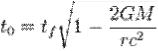
It would also cause time on the spaceraft to pass more quickly, but only when the Kinetiser was switched on, due to the effects of
general relativity.
realised on that first serious flight that the intense gravitational field around my spacecraft
https://en.wikipedia.org/wiki/Gravitational_time_dilation
GIVES THE FOLLOWINGl
1. Time dilation inside a gravitational field g per this article is
The Test Flights
For the first test flights, Jack navigated by eye. The very first flight was a 0.1 g acceleration to a height of only 10 cm. Then Jack switched
the Kinetiser off and the spacecraft simply fell to the ground. He stayed within the barn for the whole flight and for the second in which
he flew up by only 1 metre, before an unpowered fall to ground to test the built-in shock absorbers. He then did a two metre flight and
used the Kinetiser in reverse to achieve a gentle landing. This had to work!
Then, more serious test flights.
The Spacecraft Itself
For this, Jack used an modified aircraft cockpit – this was basically an old scrap light aircraft – a Cessna 172 - with the wings removed. It
was airtight at normal atmospheric pressures, so Jack had to strengthen it and improve the window and door seals so that it could
operate safely in the vacuum of space. This was one of the most difficult tasks of the whole project. For an air supply, he used
conventional SCUBA equipment. If he had had more time, he would have made a device for recycling the breathed air and removing the
carbon dioxide – a “scrubber.” However as he was aiming for all the test flights to be under an hour in duration, a SCUBA air cylinder was
perfect for the job. The only drawback was that as the cylinder discharged, the air pressure in the cockpit would rise. Jack’s answer to
this was to install a small automatic dump valve in the cockpit, so that excess gas could readily be discharged into space. This system
automatically compensated for any small leaks in the cockpit’s structure. The disadvantage was that in order to breathe fresh air, Jack
needed to use a SCUBA mouthpiece throughout the flight. However, in practice, the small leaks in the structure meant that excessive air
pressure never became a problem.
Electrical Systems on the SpaceRaft were powered by rechargeable Lithium Ion batteries.
Dark Energy
http://en.wikipedia.org/wiki/Dark_energy
http://science.nasa.gov/astrophysics/focus-areas/what-is-dark-energy/
The Gravity Field Generator
To make anything move faster a force must be applied to it. This could be magnetic, electrostatic or aerodynamic, for example. Gravity is
another common force. In a conventional rocket, the chemical reaction between propellants and oxidisers produces a powerful force
and hence acceleration, but rather inefficiently. On the Space Shuttle, for example, the force is roughly three times that of normal Earth
gravity – this is called 3g. It is deliberately restricted to this for the astronauts’ comfort. Higher accelerations are possible but could cause
the astronauts to experience temporary loss of consciousness. Higher accelerations still would cause fatal forces in their bodies, even if
a spacecraft could be built to withstand the extreme forces involved.
However if an entire spacecraft could be enveloped in a uniform gravitational field, so that the astronauts experienced exactly the same
force as the spacecraft and all of its contents, then much higher accelerations would be possible. What is key here is that the fields must
be as near uniform as possible. As an example, if the Gravity Field Generator (GFG) produces a force equal to 100 times Earth gravity (ie
100g) then so long as the field varies by no more than say 0.1 per cent (eg one tenth g) over the region of the spacecraft and its contents,
then there would be no harm to the astronauts who would probably feel almost weightless while the GFG is switched on. The challenge
would be to build a GFG into a spacecraft so that it generated the desired gravitational field so that is big enough and uniform enough,
to envelop the entire spacecraft and its contents, including itself. Such a field would have to extend for some distance beyond the
spacecraft to ensure that it is as uniform as possible in those areas where uniformity is essential. If such a spacecraft could be
constructed then if it took off from a solid surface such as a grassy field, it would take large amounts of field with it – and air as well of
course. This would be a practical problem and Jack worked out that if you took off with a low acceleration initially (say 0.1g) then you
might only take a few leaves with you. Once the spacecraft is high enough above the ground, then the force could be progressively
turned up and you would only take those leaves with you. You would also take a big “Bubble” of air with you.
This means that when travelling at very high speeds through the Earth’s atmosphere, the “Bubble” would physically protect the
spacecraft from aerodynamic forces, buffeting, heating etc. Jack believed that where the bubble was in contact with the Earth’s
atmosphere, at high speeds the friction would cause the air to be heated so much that it would glow. He had to test this theory by
conducting tests at ever-increasing speeds – he did all of this of course before Uncle John and I ever met him.
Another side effect of travelling with bubble of air enveloping the spacecraft at all times is that the appearance of the craft to a distant
observer would be very strange.
The Kinetiser
This was Jack’s brainwave and greatest ever achievement. The Gravity Field Generator was backed up by simple science that was lacking
in only one, very vital, aspect: that no-one had ever found a way of artificially generating gravitational fields. The existence of Dark
Energy was based on quite good scientific evidence, although nobody knows what it is. There were a number of theories about what it
might be, but all theories recognised that it made up 68.3 percent of the energy of the Universe – an astonishingly precise figure. It
seemed that it was spread evenly but very thinly throughout the whole Universe so that there was only about 60 tonnes of it in the Solar
System. Its existence had been proved by the discovery that the rate of the expansion of the Universe is increasing with time. Beyond
that all the theories varied widely. No-one had found a way of even detecting a piece of it in a laboratory – its existence could only be
deduced by observing the large scale expansion – an acceleration of the speed of all the galaxies of the Universe. It was Jack’s genius to
realise that it might be possible to harness Dark Energy at the local level directly to accelerate a spacecraft. He then managed to actually
do this in a device he called “The Kinetiser” from the Greek kinetikos - meaning to move. This meant that instead of converting Dark
Energy into say electrical energy and then using the electrical energy to power the GFG, jack was able to directly draw on the energy of
the Universe to power the Kinetiser.
Once Jack had worked out the principle he had to perform some small scale tests and, if they worked , then to scale up the whole
project. He realised that the Kinetiser would need to be capable of being controlled and devised an electrical control system powered by
rechargeable batteries to achieve this. He designed a control system that would enable the Kinetiser to be run at levels as low as one
hundredth of a g up to REDACTED. The Kinetiser would be mounted rigidly inside the spacecraft and would only point in the same
direction as the spacecraft itself was pointed. It would therefore be necessary to devise a more conventional way of pointing the
spacecraft in the desired direction of travel before operating the kinetiser. He reasoned that once in space, a telescope could be used to
locate the destination of the spaceflight. The craft would then be pointed direct at it and the start button pressed. Then it would be a
simple matter to reverse the situation when approaching the target in order to slow down and avoid a crash.
But how to point the system in the right direction? Conventional spacecraft use thrusters, firing in pairs, to achieve this vital goal. Jack
could have built some themselves, but he worked out how to use the Kinetiser itself to provide a small amount of rotation.
The Story of Jack’s First Ever Flight
Jack’s aviation scanner radio had been tuned to ATC as he waited patiently for his first proper opportunity to test his simulator at a
decent altitude. He had made some very brief flights before, some only 1 or two metres high, but tonight he planned to go much higher.
“Speedbird 372, climb now flight level nine zero.”
“Typical,” muttered Jack to himself. “Just what I need! When am I ever going to get off the ground?”
Jack had been waiting patiently for over an hour for the skies overhead to be clear of normal air traffic. He had planned the first flight for
one in the morning and had waited over a fortnight for suitable weather. The latest message he had heard from air traffic control was a
further nuisance. He needed some clear space before he could make his attempt so he continued to listen. He wouldn’t transmit of
course. It would only cause confusion and, in any case, he didn’t have an aeronautical transmitting licence - if that was what it was called.
Nor did he have a pilot’s licence.
Jack did not of course want to put anyone in danger. He wasn’t too worried about himself but he was determined not to put any
commercial flights in danger. That’s why he had bought himself a small passive radar system so that he could monitor all local flights on
his laptop. He could now see Speedbird 372 on his screen, about to fly within half a mile of his home on an south-easterly course for
Dover and beyond.
He knew he needed local airspace to himself for about 10 minutes, but once 372 had passed he would be okay. Just then he saw that
there was an aircraft at high altitude – 37,000 feet – about to pass over his home area. It looked as though it had flown from Europe, was
heading across England and would then probably continue to North America. Another one to worry about, but at its cruising speed it
would probably pass to the northwest in about 3 minutes.
Jack pressed the zoom out key on his computer. He could now see the whole of south east England, the Straits of Dover, part of
Northern France and Belgium and so, with the Mode S radar that could detect high altitude flights up to 100 miles away, he knew he
would safe in only a few minutes’ time as soon as those two planes were heading away from him. Nevertheless, he planned to monitor
all air traffic carefully from the moment of take off until he had flown out of the danger zone.
Yet he was still worried. Worried because he knew that air traffic control would be bound to spot him on radar as soon as he was a
hundred feet high or so. Worried because they might suspect a terrorist threat and send fighter planes to intercept him. Worried also
because he might be shot down before he had a chance to tell anyone of his amazing discovery. And absolutely terrified that he might
make some dreadful mistake and cause a passenger-carrying plane to crash.
He knew that he had taken all reasonable steps to make the first flight as safe as possible. The money that he had spent on a passive
radar system was certainly a good investment, making it possible for him to be absolutely sure about what was in the sky above him.
However, his plan would only work if he passed through the danger zone as quickly as possible. He had spent many hours working on a
spreadsheet to calculate the ideal flight plan. As it was a test flight, he was unsure of what would be safe flying speed in this rather
rickety craft. He wanted to avoid too much buffeting as it sped through the air and a limit of one hundred miles per hour seemed
reasonable to him for the first flight.
Then at last the sky was clear. Jack closed the door, turned on his air supply and pressed the start button.
As Jack’s craft rose, he continued to monitor the air traffic control frequency and his Mode S radar. He was soon rising at one hundred
miles per hour. The next ten minutes would be one of the most dangerous parts of the flight. Jack had delayed today’s flight until
atmospheric conditions were spot on: clear with as little wind as possible and, this morning, the weather was perfect. After ten minutes
he would be above the atmosphere and could use his telescope to find his target. Then he would simply line up his craft, press the flight
button and in three hours he would be there. Then ninety minutes to find his landing site, grab what he had come for and fly home
again. Simple really. Yet it had never been done before.
Aware that this might be the only chance he ever got to attempt this flight, Jack had done as much as possible in advance to ensure that
it would go off without a hitch. He might possibly be thwarted by the authorities in the first few minutes, but from then onwards he
would almost certainly be free to carry out the plan which he had been nurturing for so long. They way Jack saw it, it was all so simple.
Like a walk in the park. Or a bike ride in the woods. Even as easy as rowing a boat across a river: you just pointed the craft in the right
direction and off you went. If you were to find yourself drifting off course a little you could repoint the rowing boat and using simple
muscle power you would get there. You didn’t need complicated calculations on fuel requirements. You didn’t need to plot the course
on a map. The only navigation tools you needed were your eyes. If you could see it, and so long as the current wasn’t too strong, you
would get there.
The trouble was that he found he couldn’t rely on his eyes as he had planned to do. Whenever he applied power, the view became
distorted and the higher, the power level, the worse the distortion became and it looked as though at the highest power settings the
view might disappear altogether. To make matters worse, the radio and radar systems didn’t work too well either as soon as power was
applied. Probably a battery problem, he thought.
Jack returned home by retracing his path as much as possible, reducing speed as much as he dared so that the radar screen was usable
and he could see any aircraft that might have strayed into the area. In between, he sped up as much as possible, to minimise the
chances of being seen himself on ATC radar systems.
That had been a long while ago. It turned out that his battery-powered systems had behaved flawlessly – so that was a relief, but the
blurry view of the world outside whether observed by eye of using radar had happened for a different reason altogether, and a far more
interesting one. It had taken some fixing. He had had to resign himself that at full power he wouldn’t be able to see anything at all. This
meant that for his plan to work he would need some sort of sequencer – or autopilot – that could take control of the machine and apply
power at the right degree and for the correct time for the mission to succeed without his input.
He had developed an automatic flight sequencer and had proved it functioned correctly on several trial flights. It was possible to
programme in a sequence of manoeuvres and as the software ran on his laptop, he added an “undo last manoeuvre feature” equivalent
to Control-Z on a PC or a Command-Z on a Mac. The next step was to have a “take-me-home” feature, that would reverse all the
previous commands and take him out of trouble and back to base as quickly as he had got there in the first place. He felt rather pleased
with himself at this part of the project. It meant that he would be able to fly away from The Farm on a standard path that would be as
quick as it could be possible so as to avoid detection by hypothetical radar systems. Being automatic, it didn’t matter that the propulsion
system was on the whole time so that he could make no navigational observations at all during this phase of any flight as the outside
world was obscured and, as was just beginning to realise, having the power on all the time mean that he was effectively cloaked from all
radar systems.
He hadn’t gone as far as hea had originally intended, but he wasn’t disappointed. He had gone into space and returned safely to his
home, all in a craft he had made himself. He had learned a lot and would put his learning to good use in any subsequent flights.